Scientists Measured What Comes Off A Plastic Cutting Board. It’s Up To 79 Million Plastic Particles A Year — Into Your Food.
Then we swabbed twelve cutting boards from real family kitchens. What we found in the knife grooves is why our editors threw theirs out.


Look at the cutting board in your kitchen. Tilt it under the light. Every one of those fine white scratches is a place where your knife carved plastic off the board. The question nobody asks is where that plastic goes.
Researchers at North Dakota State University answered it. They chopped carrots on new plastic cutting boards the way an ordinary home cook does, then counted what ended up in the food. Their results, published in Environmental Science & Technology, estimated that a single plastic board can shed up to 79 million microplastic particles a year into the food prepared on it. By weight, that’s as much as 50 grams of plastic.
Key findings
- Every chopping session on a plastic board released thousands of particles directly into the food.
- Both polyethylene and polypropylene boards shed: there is no “safe” plastic.
- The deeper the knife marks, the more the board sheds, and the more there is to trap bacteria.
- A 2025 follow-up fed mice food chopped on plastic boards for 12 weeks; they developed gut inflammation and changes in their gut bacteria.
Microplastics have since been found in human blood, lungs, liver and placenta. A 2024 study in the New England Journal of Medicine found that people with microplastics in the plaque of their neck arteries had a higher risk of heart attack, stroke and death over the following three years. Nobody yet knows exactly how much of what we carry comes from the kitchen. But the cutting board is one source you can remove tonight.
So we swabbed twelve family cutting boards
Our editors collected twelve cutting boards from readers’ kitchens: plastic, wood, bamboo, glass and titanium, all in daily use and all washed the way their owners normally wash them. We swabbed the cutting surface of each one and sent the swabs for a standard plate count.

| Board (after washing) | Age | Bacteria (CFU) |
|---|---|---|
| Plastic, deeply scored | 2 yrs | 48,000 |
| Wood, glued seam | 4 yrs | 31,500 |
| Bamboo | 1 yr | 22,800 |
| Plastic, light marks | 8 mo | 9,400 |
| Glass | 3 yrs | 1,200 |
| Solid titanium | 2 yrs | Under 20 |
Selected results from the twelve boards. CFU = colony-forming units per swab.

The pattern was obvious. The boards with grooves grew bacteria; the board with no grooves didn’t. Knife marks in plastic and the grain of wood are exactly where raw chicken juice ends up, and a sponge doesn’t reach the bottom of them. That’s why food-safety guidance says a scarred plastic board should be thrown away.
Why wood, bamboo and glass aren’t the answer
Wood and bamboo don’t shed plastic, but they’re porous. Juice and moisture soak into the grain, which is why our wooden board came second-worst. They need oiling, they crack along glued seams and they grow mould in the cracks. Most bamboo boards are held together with glue.
Glass was clean, but it destroys knives. Every cut grinds the edge against a surface harder than steel. Stainless steel boards do the same and rust at the edges.
What the professionals switched to
Titanium is the material surgeons use for implants because the body leaves it alone. As a cutting surface it does three things no other board does at once. It has nothing to shed: it’s solid metal, with no plastic and no coating. It has nothing to soak into: no pores, no grain, and it doesn’t take knife grooves, so it rinses clean in seconds. And it’s softer than the hardened steel in a kitchen knife, so it doesn’t grind the edge down the way glass and stone do.
One warning from our testing. A lot of boards sold as “titanium” are stainless steel with a grey finish, or steel with a thin titanium coating. Two of the boards our readers sent us were sold as titanium; both were steel, both were heavy, and one had rust around the handle. Real titanium is noticeably lighter than steel.
Kiru Titanium Cutting Board
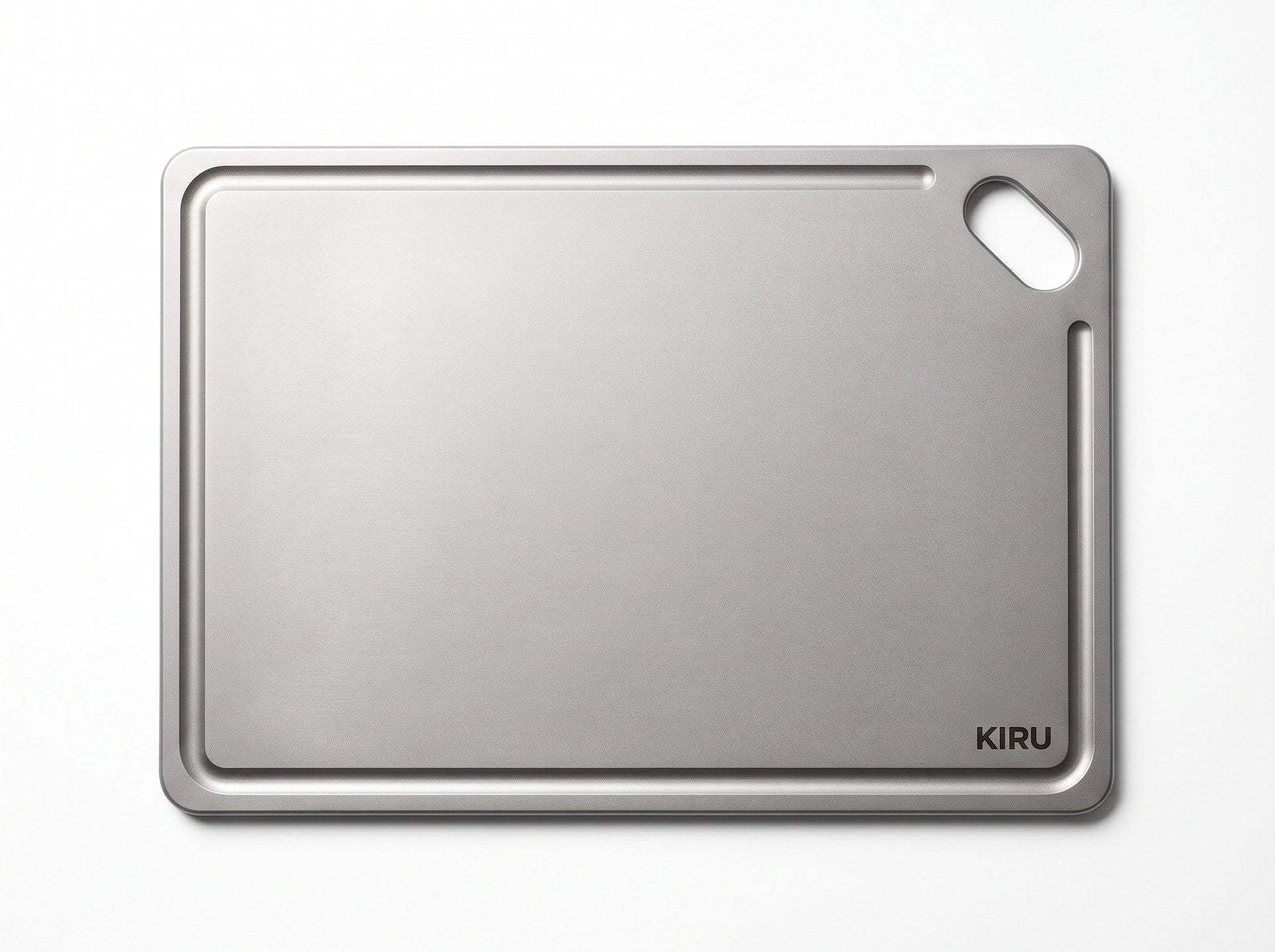
The titanium board in our swab test, and the one three of our editors now use at home. Solid food-grade titanium, not coated steel.
- Nothing to shed into food
- Under 20 CFU after washing in our test
- Double-sided: meat on one face, vegetables on the other
- Lighter than a plastic board; dishwasher-safe
- 60-day money-back guarantee
Black Friday price: $49.00 $98.00, less per board when you buy two or three.
Opens Kiru’s own site · Free US shipping
The bottom line
If your cutting board is plastic and has visible knife marks, it is shedding plastic into your food and holding bacteria in the grooves, however well you wash it. Wood swaps one problem for another. Of everything we tested, a real titanium board was the only one that solved both.
It costs more than a $12 plastic board. It’s also the last one you’ll buy.
Check Today’s Price & Stock →The Home Safety Report · © 2026
Individual results vary. Our swab test is a home test, not a peer-reviewed study.
Yadav H. et al. (2023). Cutting Boards: An Overlooked Source of Microplastics in Human Food? Environmental Science & Technology 57(22). · Gan L. et al. (2025). Environmental Health Perspectives 133(3–4). · Marfella R. et al. (2024). Microplastics and Nanoplastics in Atheromas and Cardiovascular Events. New England Journal of Medicine 390.